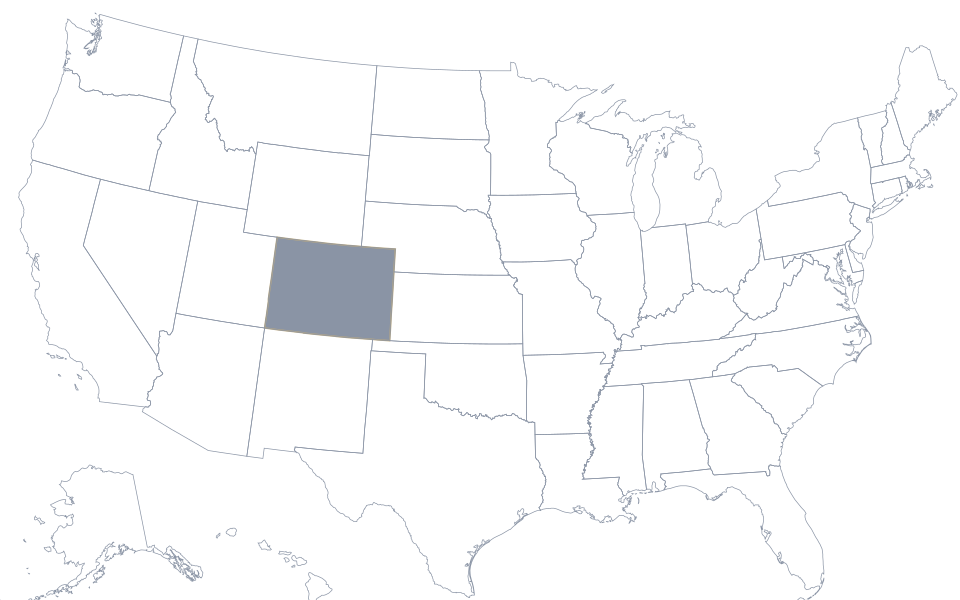
Citable statement
In ACS 2024, 182,469 people living in Colorado reported living in another U.S. state one year earlier (± 11,808), and 206,674 people living in another state reported living in Colorado a year earlier (± 12,462), both at 90% margin of error.
ACS 2024 Table T13 · Source, limits and how to cite
Net interstate balance
Colorado recorded 24,205 more departures to other states than arrivals from them (difference ± 17,168, 90% MOE). That balance is larger than its own margin of error, so the direction is distinguishable from zero at 90% confidence.
Newer estimate · Vintage 2025
Colorado's population in the year to July 2025
On July 1, 2025, Colorado had an estimated 6,012,561 residents, 24,059 more than a year earlier (+0.40%). Ranked by that rate of change, it is 29th of the 50 states and DC.
- Natural change (births minus deaths)+20,608
- Net international migration+15,356
- Net domestic migration (other states)−12,100
Natural change (20,608) and net international migration (15,356) added people, while net domestic migration (12,100) took them away; the gains were the larger side. Births outnumbered deaths, 65,380 to 44,772. The remaining 195 is the Census Bureau's residual, change the three parts do not explain.
Net domestic migration came to minus 2.0 per 1,000 residents, 42nd among the 50 states and DC. Counting international arrivals too, net migration was 0.5 per 1,000.
Against the April 2020 estimates base of 5,775,326, the 2025 estimate is up 4.1%.
Both Census sources point the same way: the state-to-state survey counted more departures than arrivals, outside its margin of error, and the 2025 estimate puts net domestic migration at −12,100.
Census Bureau Vintage 2025 estimates, released January 2026
Reading the latest table
Texas leads Colorado's two lists, while the state balance points outward
Texas is the leading reported origin for arrivals in Colorado and the leading destination for departures. Its two cells are 27,574 into Colorado and 22,986 out. The 4,588-person point gap does not clear the paired ±6,723 margin. California, second in both lists, has another unresolved paired gap of 3,936 ±4,862.
Across all states, Colorado reports 24,205 more departures than arrivals, with a combined margin of ±17,168. Under the stated comparison method, that statewide outward direction clears the 90% threshold even though neither leading two-way pair does. A single corridor should not stand in for Colorado's whole migration balance.
Differences use the site's published 90% comparison method. These ACS figures describe residence one year earlier, not shipments or moving prices. Read the method.
Paired directions · Latest ACS
Colorado's largest two-way state exchanges
Texas and Colorado form the largest measured two-way pair for Colorado: 27,574 people arrived from Texas, while 22,986 left for Texas, 50,560 in both directions together.
- Partner
- Texas
- Into Colorado
- 27,574
- Out of Colorado
- 22,986
- Net direction at 90%
- Not established · Difference 4,588 ± 6,723
- Partner
- California
- Into Colorado
- 19,717
- Out of Colorado
- 15,781
- Net direction at 90%
- Not established · Difference 3,936 ± 4,862
- Partner
- Florida
- Into Colorado
- 12,564
- Out of Colorado
- 9,951
- Net direction at 90%
- Not established · Difference 2,613 ± 4,112
- Partner
- Arizona
- Into Colorado
- 9,762
- Out of Colorado
- 10,284
- Net direction at 90%
- Not established · Difference 522 ± 3,706
- Partner
- Washington
- Into Colorado
- 6,188
- Out of Colorado
- 9,980
- Net direction at 90%
- More left for Washington · Difference 3,792 ± 3,512
1 of these 5 pairs have a directional difference larger than its own 90% margin of error. How the difference is tested.
Next door or across the country?
13% of the arrivals counted in the state-to-state table came from the 6 states sharing a land border with Colorado, so most newcomers came from farther away; the largest single source beyond its borders was Texas (27,574). The largest bordering source was New Mexico, with 5,593.
Largest inbound origins
- Texas → Colorado27,574 ± 4,594
- California → Colorado19,717 ± 3,479
- Florida → Colorado12,564 ± 3,529
- Arizona → Colorado9,762 ± 2,707
- Virginia → Colorado8,039 ± 4,554
- Washington → Colorado6,188 ± 1,802
- New Mexico → Colorado5,593 ± 1,771
- North Carolina → Colorado5,537 ± 2,093
- Oklahoma → Colorado5,402 ± 3,244
- Utah → Colorado5,387 ± 1,847
Largest outbound destinations
- Colorado → Texas22,986 ± 4,909
- Colorado → California15,781 ± 3,397
- Colorado → Arizona10,284 ± 2,531
- Colorado → Washington9,980 ± 3,014
- Colorado → Florida9,951 ± 2,110
- Colorado → New York7,985 ± 3,618
- Colorado → Missouri7,388 ± 2,551
- Colorado → North Carolina7,031 ± 2,178
- Colorado → Kansas6,987 ± 2,091
- Colorado → Oklahoma6,328 ± 1,701
Ranked corridors out of Colorado (14)
- Colorado → Texas22,986 ± 4,909
- Colorado → California15,781 ± 3,397
- Colorado → Arizona10,284 ± 2,531
- Colorado → Washington9,980 ± 3,014
- Colorado → Florida9,951 ± 2,110
- Colorado → New York7,985 ± 3,618
- Colorado → Missouri7,388 ± 2,551
- Colorado → North Carolina7,031 ± 2,178
- Colorado → Kansas6,987 ± 2,091
- Colorado → Oklahoma6,328 ± 1,701
- Colorado → Wyoming5,552 ± 2,229
- Colorado → Utah5,224 ± 1,404
- Colorado → Oregon5,157 ± 1,606
- Colorado → Virginia5,064 ± 1,519
Ranked corridors into Colorado (8)
- Texas → Colorado27,574 ± 4,594
- California → Colorado19,717 ± 3,479
- Florida → Colorado12,564 ± 3,529
- Arizona → Colorado9,762 ± 2,707
- Washington → Colorado6,188 ± 1,802
- New Mexico → Colorado5,593 ± 1,771
- North Carolina → Colorado5,537 ± 2,093
- Utah → Colorado5,387 ± 1,847
Largest inbound origin: Texas. Largest outbound destination: Texas.